AVAILABLE NATIONWIDE. INSTALLED BY LOCAL PARTNERS.
Get an Estimate

AVAILABLE NATIONWIDE. INSTALLED BY LOCAL PARTNERS.
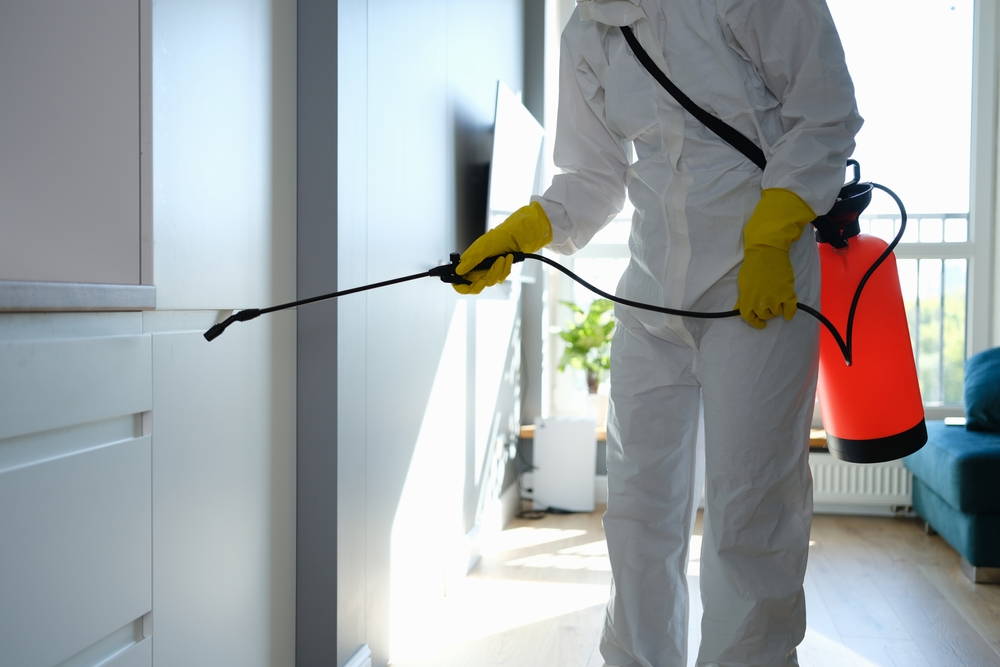
If you have a mold problem in your home, it often takes specialized tools and cleaning to fully remove it, especially in damp areas or when mold has spread into porous materials like carpet and drywall. But what about the leftover mold spores that may have landed on nearby flooring and carpeting?
Many homeowners often ask, “Can you vacuum mold?” Yes, you can vacuum mold, but only in limited situations with proper equipment such as a HEPA vacuum. Vacuuming mold helps contain and clean up spores, but it doesn’t remove the mold itself or prevent it from coming back.
Combining professional mold remediation, HEPA vacuuming of dry surfaces, and a whole-home system like Maple Air Pür Plasma™ addresses both surfaces and the air. This comprehensive approach reduces airborne spores, supports long-term indoor air quality, and helps prevent mold from returning to keep your home healthier for the long term.
Cleaning up mold with a regular household vacuum is not safe because they aren’t designed to trap these particles. Standard vacuums often recirculate spores back into the air where family members can breathe them in. If you do need to vacuum, only use a sealed HEPA unit, and limit vacuuming to small, dry areas.
HEPA-equipped vacuums are highly effective at removing mold spores, capturing up to 99.97% of particles as small as 0.3 microns. However, vacuuming does not kill mold or eliminate growth embedded in porous materials like wood, carpet, or drywall. Moisture issues like hidden leaks or high indoor humidity also need to be taken care of, or the mold can return.
Vacuuming can help after remediation by picking up leftover spores on surfaces, but it won’t prevent mold from coming back or improve your air over the long term. For larger infestations or porous materials, professional mold remediation is still the safest and most effective option.
When used correctly, HEPA vacuuming supports the overall cleanup process and helps reduce exposure to spores, but it should only be done after most of the visible mold has already been removed. At that stage, a HEPA vacuum can help capture leftover surface spores before they settle back into your home.
Only vacuum dry, inactive mold. Never vacuum wet or actively growing mold, as this can release spores into the air. Always use a sealed, bagged HEPA unit and wear proper protective gear. After vacuuming, carefully remove and seal the filter or bag so trapped spores don’t escape back into your home.
While a HEPA vacuum can pick up spores on the surface, it won’t get the mold that has settled deep in the carpet fibers or padding. Because mold often embeds itself below the surface, cleaning alone usually isn’t enough, and the safest option is often to remove and replace the affected carpet.
After carpet removal, a HEPA vacuum for mold can help capture leftover surface spores and dust to reduce the chance they spread elsewhere in your home.
Even after thoroughly cleaning your home, mold can come back if the conditions that allowed it to grow in the first place aren’t fixed. Moisture from leaks, high humidity, or poor ventilation often remain, giving any leftover spores the chance to thrive again.
Loose spores can also continue circulating through the air, settling on surfaces throughout your home. Without constant air treatment to capture these spores, even a home that looks clean can quickly see mold reappear. That’s where solutions like Maple Air come in to help reduce airborne spores and support long-term indoor air health.
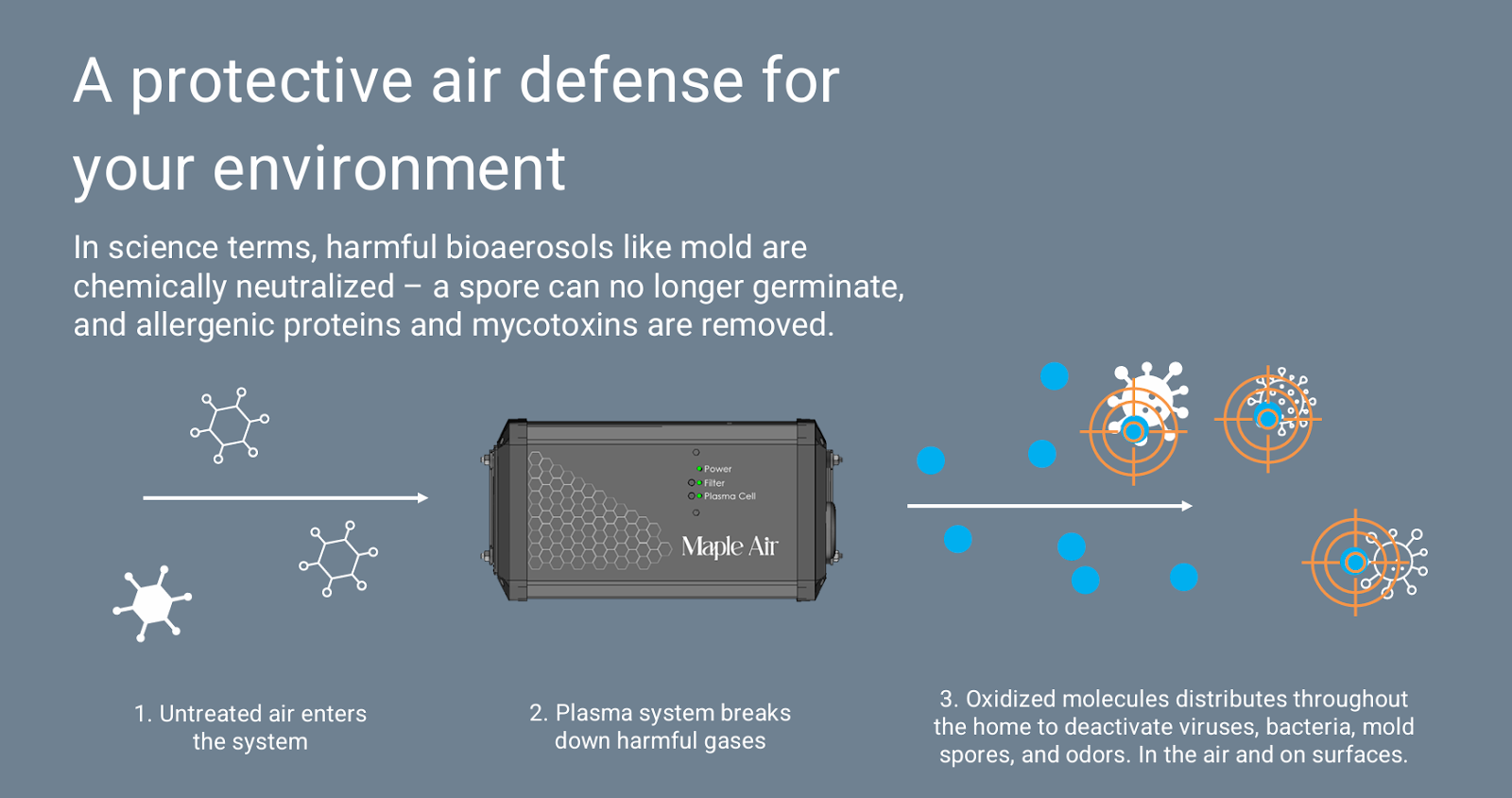
Cleaning up mold and using HEPA vacuums helps remove spores from surfaces, but it doesn’t address the air throughout your home. Mold spores can move through your HVAC system and continue circulating long after cleanup. If moisture is still present, those lingering particles can settle and grow again. That’s why ongoing, whole-home air treatment adds an important layer of protection.
This is where Maple Air Pür Plasma™ works alongside traditional remediation. While vacuuming and removal take care of visible growth and surface debris, Maple Air continuously treats the air as it moves through your HVAC system. That steady treatment helps reduce the chance of particles resettling and supports healthier indoor air over time.
Maple Air doesn’t just destroy mold; it helps neutralize what makes it harmful. The reactive oxygen molecules it produces break down the outer wall of spores, prevent it from germinating, and oxidize allergenic proteins and mycotoxins. After treatment, spores are significantly less reactive and far less likely to trigger irritation, which makes your cleanup efforts more complete.
In controlled testing, Maple Air steadily reduced mold-related toxins, cutting levels by roughly 24% to 70% within just 15 to 60 minutes. The strongest results occurred closest to the unit, where the oxidizing molecules produced by its plasma field are most concentrated.
A HEPA vacuum for mold removal and professional mold remediation can help remove mold from surfaces, but long-term protection requires treating the air your family breathes every day.
Combining thorough cleanup with a whole-home system like Maple Air Pür Plasma™ can reduce airborne spores, prevent mold from returning, and support cleaner, healthier indoor air. For guidance on keeping your home safe from mold and improving your indoor air quality, contact us at info@getmapleair.com to learn more.


Healthier air in
Indian Trail, NC
with Maple Air
1500 sq ft home
Air Bioburden
(microbe units per cubic meter of air)
Industry standard:
>300 = poor air quality,
<100 = healthy air quality
Lab: Scientific Air Solutions in Turlock, CA


Healthier air in
Marvin, NC
with Maple Air
4000 sq ft home
Air Bioburden
(microbe units per cubic meter of air)
Industry standard:
>300 = poor air quality,
<100 = healthy air quality
Lab: Scientific Air Solutions in Turlock, CA


Healthier air in
Matthews, NC
with Maple Air
5000 sq ft home
Air Bioburden
(microbe units per cubic meter of air)
Industry standard:
>300 = poor air quality,
<100 = healthy air quality
Lab: Scientific Air Solutions in Turlock, CA



Air improvement
Surfaces improvement

Air improvement
Surfaces improvement

Air improvement
Surfaces improvement

Air improvement
Surfaces improvement

Air improvement
Surfaces improvement

Air improvement
Surfaces improvement

Air improvement
Surfaces improvement
Every Piece Is Unique

Not all air purifiers work the same, and the technology inside makes a big difference in what actually gets removed from your air. This guide compares the most common systems and explains which ones are best equipped to handle the full range of indoor pollutants.

If you’re comparing ozone generators and air purifiers, it’s important to understand they work in very different ways. This article breaks down how ozone systems operate, their limitations and safety concerns, and why plasma air purification offers a more practical solution for everyday, occupied spaces.
Available nationwide