AVAILABLE NATIONWIDE. INSTALLED BY LOCAL PARTNERS.
Get an Estimate

AVAILABLE NATIONWIDE. INSTALLED BY LOCAL PARTNERS.
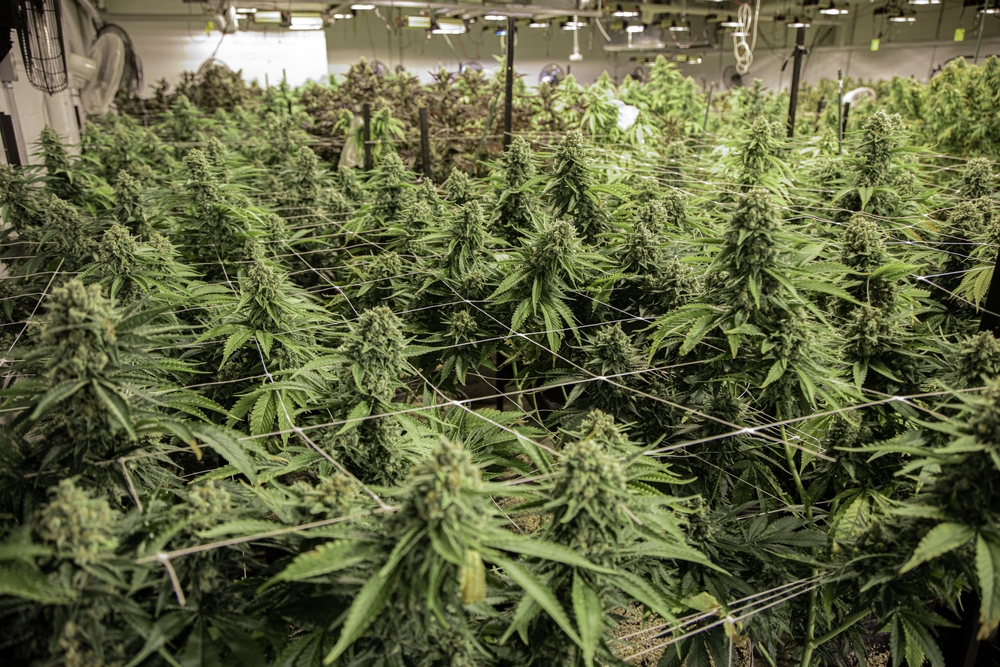
If you manage a cannabis cultivation facility, you know how much attention goes into climate control. Temperature, humidity, vapor pressure deficit (VPD), and airflow are constantly monitored and tightly controlled because even small fluctuations can affect yield, chemical quality, and overall consistency. A well-controlled environment is crucial, but climate control alone cannot prevent contamination.
Even in facilities with advanced filtration systems, mold, VOCs, and other airborne contaminants can develop. Many cannabis operators only start addressing air quality after a batch fails, odors linger, or pathogens have already caused crop losses. Botrytis may appear late in flower, or a batch may fail for Aspergillus despite meeting environmental benchmarks. In many cases, the problem isn’t temperature or humidity but airborne contamination that hasn’t been fully controlled.
Maple Air’s Pür Plasma™ continuously reduces airborne pathogens, including mold spores, as well as VOCs across the cultivation lifecycle. Maple Air holds the patent for this plasma-based technology and continues refining it, now operating on its fifth-generation system. It works alongside HVAC filtration to lower biological load before contamination can take hold, leading to steadier yields and healthier crops.
As more states legalize cannabis, cultivation facilities are expanding nationwide. Cannabis’ dense, resin-rich flowers create microenvironments where spores and pathogens can thrive.
Inside every facility, biological particles like spores, bacteria, viruses, and organic gases move continuously through the air. Over time, this creates bioburden – the concentration of biological material in the air and on surfaces. In many facilities, internal bioburden can exceed outdoor levels, fueled by people, plants, equipment, and incoming air, then amplified as it recirculates through the space.
Problems like Botrytis, cannabis powdery mildew, and Fusarium do not start on the plant. They begin as microscopic organisms in the air, waiting for the right conditions to settle, grow, and spread. These contaminants can travel through every stage of the cannabis grow cycle, including tissue culture labs, veg rooms, flower rooms, drying and curing spaces, and even transportation and retail.
Humidity control, sanitation, and a robust Integrated Pest Management (IPM) plan minimize mold risk, but without actively reducing airborne load, spores simply continue circulating. Effective contamination management requires continuously lowering biological burden rather than relying only on environmental control and cultural practices.
Maple Air’s Pür Plasma™ system has been tested in controlled BSL-2 laboratories and outperformed PCO-based systems. While other systems take 60-90 minutes, Pür Plasma™ works in just one to two minutes.
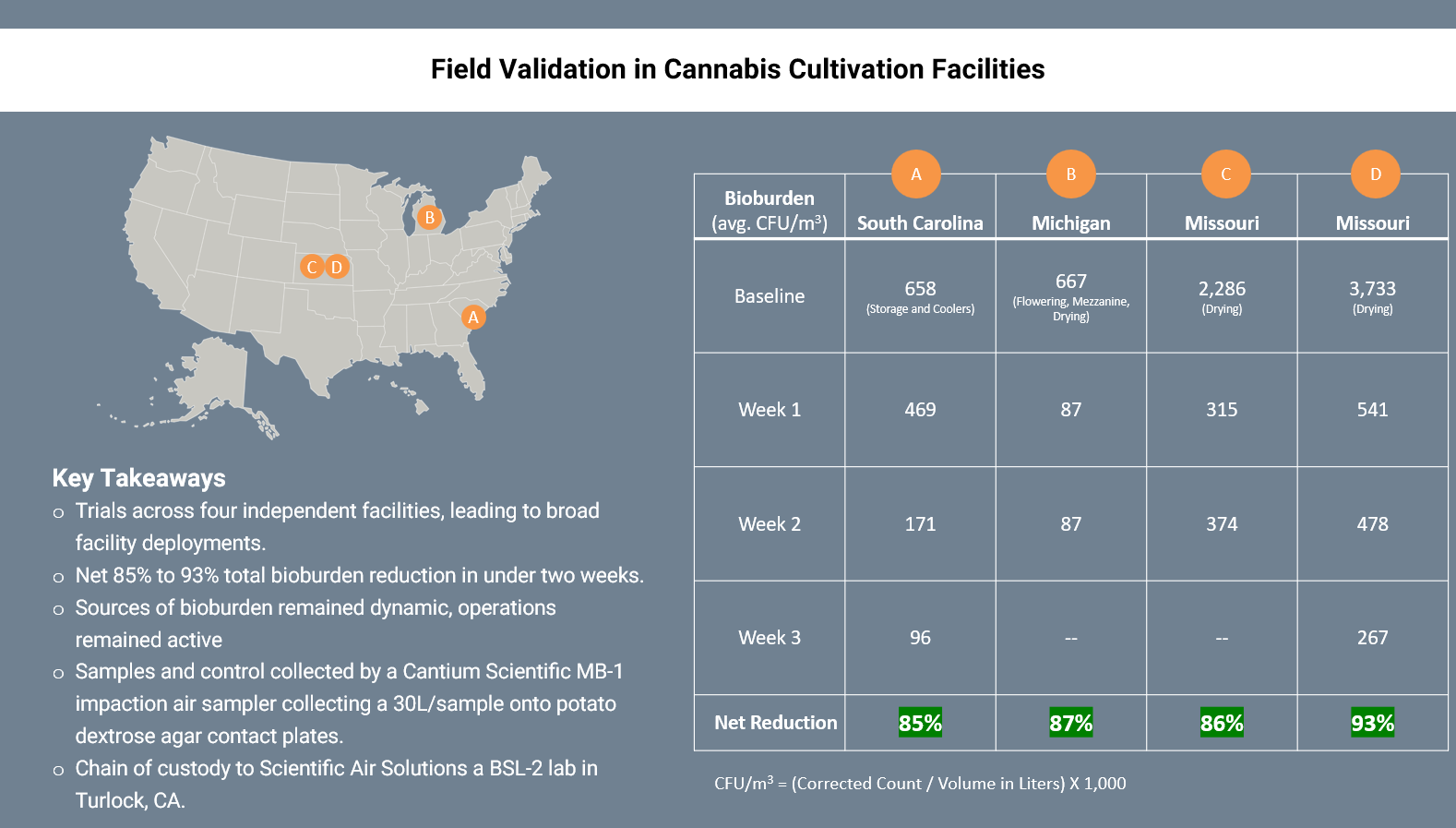
Field trials in four independent facilities confirmed real-world results. Within two weeks of installation, total airborne bioburden dropped 85-93 percent even while operations continued and new contamination sources remained active.
Continuous, real-time reduction shortens the window for spores to settle, lowering the chances of contamination before it reaches the canopy.
Fungal growth is a constant concern in cannabis cultivation, especially in cannabis flower rooms and drying areas. Even a small number of spores can spread quickly and affect both yield and quality. High-risk organisms such as Aspergillus spp., Botrytis cinerea, and Fusarium spp. can damage flowers, create off-odors, and lead to failed cannabis microbial testing.
Field data from a large cultivation facility shows what continuous air treatment can do. Baseline fungal counts in a drying room, for example, measured 3,733 CFU/m³, but within three weeks of installing Pür Plasma™ units, counts dropped by 93 percent (267 CFU/m³). Reducing airborne fungi in real time minimizes risk while normal operations continue to help growers protect crop quality and produce more dependable yields.
“Air quality in cannabis cultivation, manufacturing, and distribution isn’t just about cleanliness; it’s about risk management,” says Travis Higginbotham, Founder and CEO of Due Diligence Horticulture. “When operators continuously control airborne pathogens, they protect worker safety, stabilize crop performance, reduce disease-related losses, and dramatically reduce the risk of failed batches. For operators experiencing 10-15% batch failure rates, preventing just three 50-lb wholesale flower batches valued at roughly $1,200 per pound can offset the entire cost of a facility-wide air sanitation deployment in the first year, while reducing failure risk by as much as 90%.”
Airborne contamination behaves differently across each part of a facility, so reducing it throughout the operation is key. Filtration alone cannot handle every risk, and each stage of growth has its own vulnerabilities.
HEPA and carbon filters capture dust, spores, and particles, but they don’t actively reduce pathogens or VOCs, and PCO systems can vary depending on airflow, humidity, and maintenance.
Cannabis remediation is costly, time-consuming, and disruptive. Reactive measures only address contamination after it’s already reached the plant. With Pür Plasma™, airborne pathogens are reduced before they reach the flowers. Continuous air treatment helps stabilize yields, support compliance, and prevent late-stage surprises. Taking a proactive approach avoids losses and gives growers healthier plants and more predictable results across the cultivation lifecycle.
Pür Plasma™ integrates with existing cannabis cultivation systems without requiring a full overhaul. Systems can be deployed through duct-mounted integrations or wall-mounted units, allowing facilities to upgrade air treatment in both new builds and retrofits.
Maple Air’s proven approach starts with a thorough assessment of your cultivation environment. This includes evaluating baseline bioburden levels, airflow patterns, potential contamination points, integrated pest management strategies, and daily operational workflow. By analyzing how air and contaminants move throughout the facility, Maple Air can design a system that reduces airborne load consistently across each stage of cultivation.
This tailored approach helps ensure reliable performance while supporting healthier plants and more predictable yields.
When considering Maple Air’s Pür Plasma™ for your cultivation facility, operators often have a few key questions to make sure it’s the right fit:
Temperature and humidity control remain essential, but managing airborne contamination is equally critical for protecting yield and meeting microbial standards. HVAC moves air, filtration captures particles, but only plasma-based systems like Pür Plasma™ actively reduce viable biological and chemical load in real time.
Across every stage, from cannabis tissue culture to drying, lowering airborne load reduces contamination before it reaches flowers. For facilities investing in advanced filtration and climate control, upgrading to sterilization strengthens long-term performance, protects crop quality, and supports consistent compliance.
To learn more about how Pür Plasma™ works alongside your existing HVAC systems, email us at info@getmapleair.com.


Healthier air in
Indian Trail, NC
with Maple Air
1500 sq ft home
Air Bioburden
(microbe units per cubic meter of air)
Industry standard:
>300 = poor air quality,
<100 = healthy air quality
Lab: Scientific Air Solutions in Turlock, CA


Healthier air in
Marvin, NC
with Maple Air
4000 sq ft home
Air Bioburden
(microbe units per cubic meter of air)
Industry standard:
>300 = poor air quality,
<100 = healthy air quality
Lab: Scientific Air Solutions in Turlock, CA


Healthier air in
Matthews, NC
with Maple Air
5000 sq ft home
Air Bioburden
(microbe units per cubic meter of air)
Industry standard:
>300 = poor air quality,
<100 = healthy air quality
Lab: Scientific Air Solutions in Turlock, CA



Air improvement
Surfaces improvement

Air improvement
Surfaces improvement

Air improvement
Surfaces improvement

Air improvement
Surfaces improvement

Air improvement
Surfaces improvement

Air improvement
Surfaces improvement

Air improvement
Surfaces improvement
Every Piece Is Unique


Not all air purifiers work the same, and the technology inside makes a big difference in what actually gets removed from your air. This guide compares the most common systems and explains which ones are best equipped to handle the full range of indoor pollutants.

If you’re comparing ozone generators and air purifiers, it’s important to understand they work in very different ways. This article breaks down how ozone systems operate, their limitations and safety concerns, and why plasma air purification offers a more practical solution for everyday, occupied spaces.
Available nationwide