AVAILABLE NATIONWIDE. INSTALLED BY LOCAL PARTNERS.
Get an Estimate

AVAILABLE NATIONWIDE. INSTALLED BY LOCAL PARTNERS.

Once considered completely eliminated in the United States, the measles virus has returned, threatening both children and adults in communities across the country. According to the Centers for Disease Control and Prevention, more than 2,000 cases of measles were reported in 2025, compared to just 16 outbreaks the year before.
Measles is extremely contagious and can lead to a host of serious health issues, especially in young children. If an infected person is nearby, up to 90% of unvaccinated people can catch measles, which is far higher than seasonal flu.
Understanding how measles spreads indoors can help families stay safe, especially when combined with good hygiene, up-to-date vaccinations, and indoor air quality solutions like whole-home air purifiers and ventilation.
Measles is a viral illness caused by the rubeola virus. It mainly affects the respiratory system, causing fever, cough, runny nose, and red rash. Before vaccines, nearly every child caught measles, and thousands were hospitalized each year.
The introduction of the MMR vaccine in the 1960s significantly reduced cases, and by 2000 measles was considered eliminated in the U.S., meaning there was no continuous spread. In recent years, though, measles has returned as vaccination rates dropped and herd immunity weakened. The COVID-19 pandemic also delayed routine shots, increasing the risk of measles transmission.
As of January 2026, 45 states had reported confirmed measles cases for the full year of 2025. Measles is spreading quickly in South Carolina, especially in Spartanburg County, where over 300 cases were reported as of early January 2026. North Carolina has also seen recent measles activity, with six reported cases already in January. Health officials warn this resurgence could threaten the nation’s long‑held measles elimination status if transmission isn’t curbed.
Of the 2,144 measles cases reported in the U.S. in 2025 – the most since 1992 – 93% of the people were either unvaccinated or had an unknown vaccination status, and 11% required hospitalization.
Measles spreads mostly through the air. When someone infected breathes, talks, coughs, or sneezes, tiny droplets and aerosol particles can hang in the air for up to two hours, especially in spaces with poor ventilation.
The measles virus can also settle on objects around the home, and touching a contaminated surface before touching your mouth, nose, or eyes can lead to infection. Just breathing the same air as someone who’s infected can be enough to catch the virus.
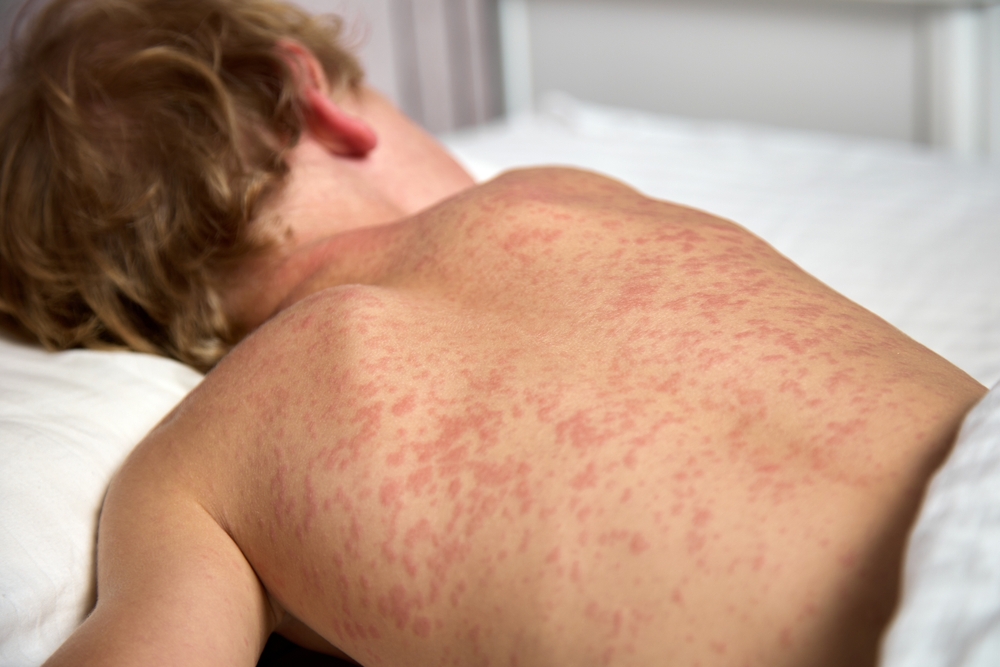
Some of the most common places where measles exposure occurs include:
Knowing where measles hotspots are can help you take practical steps to reduce exposure indoors.
Vaccination remains the strongest protection against measles and plays a major role in limiting how the virus spreads indoors. Two doses of the MMR vaccine provide about 97% protection, while a single dose offers roughly 93%. Staying up to date not only protects your household but also helps safeguard infants and others who can’t be vaccinated.
Measles can enter a home through visitors, school-aged children, or anyone exposed in public spaces, especially in communities with lower vaccination rates. Because the virus can stay in the air for hours, even a short indoor interaction can lead to exposure once it’s brought inside.
Along with vaccination, families can lower the risk by adding a few everyday habits into their routine. Washing hands regularly, covering coughs and sneezes, and wiping down high-touch surfaces can prevent the measles virus from spreading. If a family member is sick, keeping them in a separate room when possible and avoiding shared items like towels or utensils can limit exposure.
Improving airflow also makes a difference. Opening windows, using fans, or running air purifiers in shared spaces helps to dilute airborne virus particles. Together with vaccination and simple hygiene habits, these steps help keep everyone in your home safer during an outbreak.
Plasma-based purifiers, like the Maple Air PürPlasma™ system, reduce the risk of measles indoors by actively neutralizing virus particles in the air. It generates reactive oxidizing molecules that target airborne viruses, mold spores, VOCs, and harmful gases throughout a space. As these oxidized molecules move through the occupied space, they deactivate airborne bioaerosols and reduce the burden in the home, lowering the probability of getting sick from poor air quality.
Whole-home plasma systems continuously protect against the measles virus, treating both the air and surfaces in homes as well as commercial spaces like schools, gyms, and hospitals. Maple Air – trusted by leading brands such as Hilton Hotels and Penn State athletics – is 15 times more effective than older air purification systems that use outdated technology.
Other air purification technologies have serious limitations against the measles virus. HEPA filters trap tiny particles, including droplets carrying viruses, but they don’t kill the virus. UV-C lights and other systems try to inactivate microbes, yet their effectiveness is limited in real-world airflow conditions.
Even with two doses of the MMR vaccine, about 3% of people may not develop full immunity to measles, leaving them at risk of infection. That’s why it’s important to combine vaccination with other preventive measures like air purification to give families the best chance to stay safe during an outbreak.
Maple Air isn’t only effective against the measles virus; it also helps protect against a variety of common viruses and bacteria, including norovirus, influenza, rhinovirus, coronavirus, hepatitis B and C, and Staphylococcus aureus. This makes it an effective tool for keeping both homes and commercial spaces safer from a wide range of pathogens.
Measles isn’t just a disease of the past. It spreads easily through the air, can linger in indoor spaces for hours, and has the ability to infect people even after the sick person has left the room. This makes it especially important to take precautions in homes, schools, and other shared spaces.
Vaccination remains the strongest defense, but combining it with proper ventilation, regular hygiene practices, and advanced air treatment, like the Maple Air PürPlasma™, adds a layer of protection. Paying attention to where the virus might linger and taking proactive steps is the best way for families to stay safe as measles continues to circulate across the U.S. in 2026.
Contact us today to get an estimate on Maple Air’s Pür Plasma™ for your home or business.


Healthier air in
Indian Trail, NC
with Maple Air
1500 sq ft home
Air Bioburden
(microbe units per cubic meter of air)
Industry standard:
>300 = poor air quality,
<100 = healthy air quality
Lab: Scientific Air Solutions in Turlock, CA


Healthier air in
Marvin, NC
with Maple Air
4000 sq ft home
Air Bioburden
(microbe units per cubic meter of air)
Industry standard:
>300 = poor air quality,
<100 = healthy air quality
Lab: Scientific Air Solutions in Turlock, CA


Healthier air in
Matthews, NC
with Maple Air
5000 sq ft home
Air Bioburden
(microbe units per cubic meter of air)
Industry standard:
>300 = poor air quality,
<100 = healthy air quality
Lab: Scientific Air Solutions in Turlock, CA



Air improvement
Surfaces improvement

Air improvement
Surfaces improvement

Air improvement
Surfaces improvement

Air improvement
Surfaces improvement

Air improvement
Surfaces improvement

Air improvement
Surfaces improvement

Air improvement
Surfaces improvement
Every Piece Is Unique

Not all air purifiers work the same, and the technology inside makes a big difference in what actually gets removed from your air. This guide compares the most common systems and explains which ones are best equipped to handle the full range of indoor pollutants.

If you’re comparing ozone generators and air purifiers, it’s important to understand they work in very different ways. This article breaks down how ozone systems operate, their limitations and safety concerns, and why plasma air purification offers a more practical solution for everyday, occupied spaces.
Available nationwide